9 October 2026
Open Letter
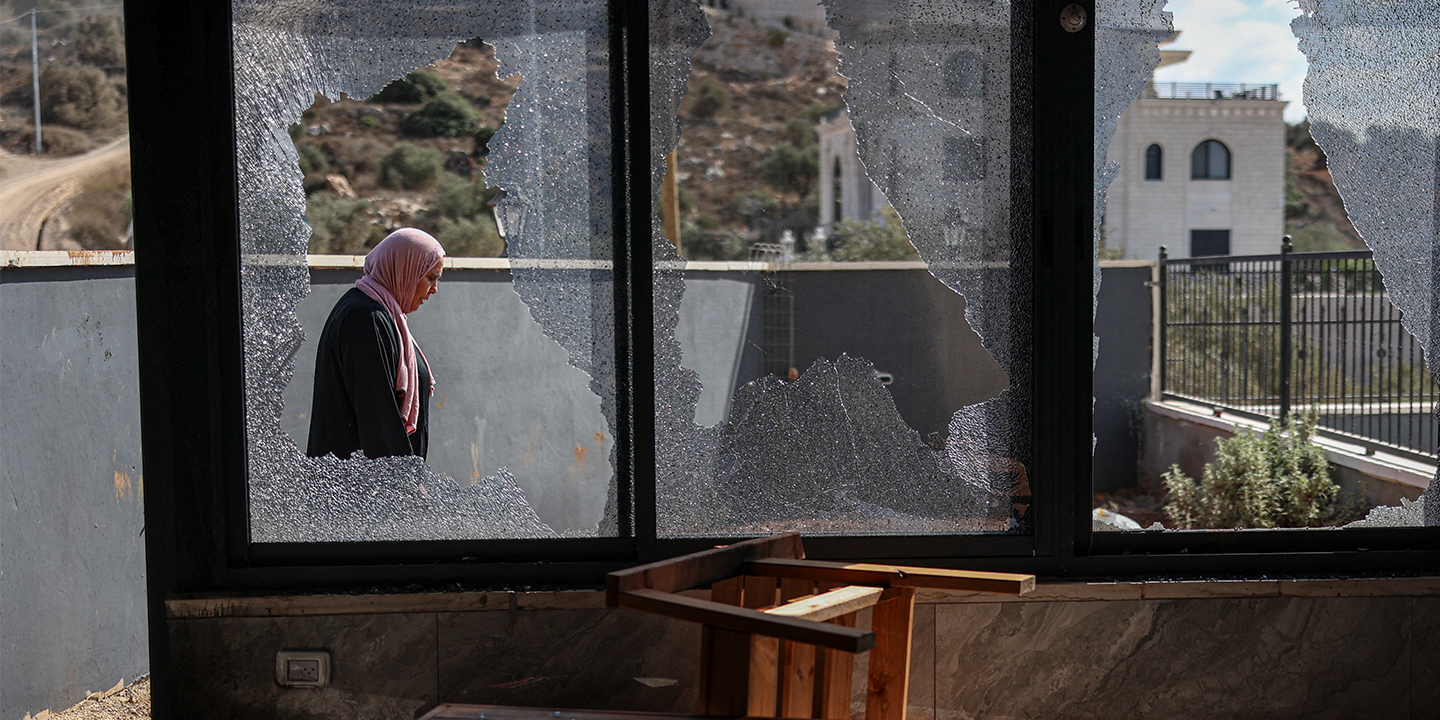
On 23 October Israeli Prime Minister Benjamin Netanyahu announced a full lockdown of the Occupied West Bank following the death of two Israeli soldiers at a military checkpoint near the southern city of Hebron. Soon after, the Israeli military launched a large-scale assault on Hebron, during which Israeli forces have demolished homes and commercial property, restricted freedom of movement for residents and forcibly displaced over 2,000 Palestinians. Simultaneously, Israeli forces have conducted raids across at least 13 Palestinian towns and cities in the north, detaining dozens of Palestinians.
Mayy El Sheikh, Spokesperson for the Office of the UN High Commissioner for Human Rights (OHCHR) in the Occupied Palestinian Territory, said the lockdown “follows a pattern of collective punishment” and was “yet another episode in a never-ending stream of suffocating measures making life more and more unbearable for Palestinians.” UN High Commissioner for Human Rights Volker Türk called on Israel to end its military operation in Hebron and warned that threats by Israeli officials to “empty and erase entire neighbourhoods also raise serious concerns of ethnic cleansing.”
The rapid forcible displacement of thousands of Palestinians in Hebron has drawn concerning similarities to Israel’s military operations in early 2025 in the northern Occupied West Bank during which over 30,000 Palestinians were forcibly displaced, primarily from refugee camps that were effectively emptied out. Widespread destruction of infrastructure and continued restrictions by Israeli forces have prevented most from returning to their homes.
Israel’s movement restrictions, alongside intensifying settler violence, come at the height of Palestinian’s annual olive harvest and have prevented thousands of farmers from reaching their groves for the season. Patterns of Israeli settlers targeting the olive harvest – often with or under the protection of Israeli forces – have become deeply entrenched over the decades; however, the violence this year is setting new records. The UN documented at least 160 olive harvest-related settler attacks in the first two weeks of October alone, nearly eclipsing the total number of attacks documented across the entire 2025 harvest. These attacks have involved live ammunition, arson, crop theft and damage to olive groves. Seven UN experts stressed that the destruction of olive trees “deprives families of far more than a single harvest: it undermines local food systems, cultural practices and ways of life.”
Israel must immediately lift the lockdown on the Occupied West Bank and cease its military assault on Palestinian communities. The international community must urgently intervene to protect Palestinians from forcible displacement, dispossession and settler violence. UN member states, in compliance with the 2024 July Advisory Opinion of the International Court of Justice, must refrain from providing aid or assistance that helps sustain Israel’s unlawful presence in the Occupied Palestinian Territory.
On 26 October an alleged drone strike by the Sudanese Armed Forces (SAF) hit a market in Nyala, South Darfur, killing more than 100 people and injuring at least 113. The attack comes amid a sharp escalation in drone strikes across Sudan, with attacks reported in Darfur, Kordofan, Blue Nile and Khartoum. Although both the SAF and the Rapid Support Forces (RSF) have used drones throughout the conflict, the recent intensification of these attacks has resulted in mounting civilian casualties and damage to civilian infrastructure.
The scale of the escalation is reflected in figures documented by the Office of the UN High Commissioner for Human Rights (OHCHR), which recorded at least 306 deaths and hundreds of injuries from drone strikes conducted by both the SAF and the RSF during the first three weeks of October. Strikes were reported across Sudan, including in Ghubeish and El Nuhud in West Kordofan and Abu Shendi in Blue Nile.
One strike hit a market and transport hub in Al-Dibab, West Kordofan, an area controlled by the RSF, killing at least 139 people. According to witnesses, people had gathered at the hub to find trucks and other transport to return to their villages after a market day. The drone reportedly struck twice, approximately 10 minutes apart.
Meanwhile, on 19 October drone strikes killed at least 153 people at Amiet Market in Abyei, a disputed area on the border between Sudan and South Sudan. These deaths were in addition to those in OHCHR’s tally. Amiet Market is a major trading center serving the Ngok Dinka and Misseriya communities, as well as people displaced by the war in Sudan. The strikes reportedly hit several parts of the market, including areas where fuel was sold, sparking fires that destroyed vehicles and buildings. Some victims were burned beyond recognition, and ongoing fires hampered efforts to recover bodies. The attack was likely intended to disrupt fuel supplies supporting RSF operations, as the market has reportedly served as a supply point for fuel used in Kordofan and Darfur.
The recent strikes demonstrate the growing role of drone warfare in Sudan’s conflict and its devastating consequences for civilians. In September the UN Fact-Finding Mission (FFM) for Sudan concluded that foreign suppliers had substantially enhanced the drone capabilities of both the SAF and RSF, highlighting the role of external military support in expanding their capabilities. The FFM also found reasonable grounds to believe that the SAF had used foreign-supplied drones in operations that harmed civilians and civilian objects.
The SAF and RSF must immediately cease unlawful attacks against civilians and civilian infrastructure and take all necessary precautions to prevent further civilian harm. States must urgently address external support that enables further atrocities, including from the United Arab Emirates, and enforce sanctions and close gaps that allow weapons and military assistance to reach the warring parties. The UN Security Council’s 1591 Sudan Sanctions Committee should urgently consider the outstanding report of the Panel of Experts and act on its findings. The Council should also expand the arms embargo to cover all of Sudan, reflecting the nationwide use of drones and growing civilian toll.
Mali’s military campaign against armed Islamist and separatist groups is causing serious harm to civilians, while the groups themselves are also committing grave abuses. Insecurity and protection risks have heightened across the country in recent months amid recurrent attacks by non-state armed groups and abusive security operations, fueling cycles of violence and retaliation. More than 400 civilians were killed between April and August 2026 alone.
The risk of retaliatory violence by armed groups was demonstrated on 18 October, when at least 54 civilians were killed in attacks by militants affiliated with the so-called Islamic State Sahel Province (ISSP) across at least five localities in the Ménaka region. The militants reportedly opened fire indiscriminately, set homes ablaze and stole livestock. The attacks also targeted several camps belonging mainly to and occupied by the pastoralist Daoussahak community. According to security sources and local officials, the attacks appeared to be in retaliation for alleged abuses committed the previous week by the pro-government Movement for the Salvation of Azawad (MSA) militia and Russia’s Africa Corps. The Malian armed forces (FAMa) acknowledged conducting operations about 65 kilometers southwest of Ménaka, saying they had struck a major base “housing several terrorist elements as well as military equipment and logistical supplies.” A municipal official in Ménaka, however, alleged that MSA and Africa Corps forces had abused civilians suspected of providing information to ISSP.
These incidents are part of a broader pattern of abuses by all armed actors in central and northern Mali. In two October 2026 publications, Human Rights Watch documented alleged serious violations of International Humanitarian Law (IHL) by the FAMa and allied forces, as well as abuses by Islamist and separatist fighters. The findings included drone strikes causing civilian casualties, the killing of children and the torture and execution of captured soldiers. HRW’s subsequent report also documented allegations that the FAMa and Africa Corps were responsible for a September drone strike that killed eight civilians and the torture and inhumane detention of civilians at a military base.
The Malian authorities must ensure prompt, independent and impartial investigations into alleged violations and atrocity crimes, make the findings public and bring the suspected perpetrators to justice in fair proceedings. The National Human Rights Commission and relevant regional and international human rights mechanisms should support independent monitoring and accountability efforts. All parties to the conflict must respect IHL and protect civilians. The Malian authorities must take concrete steps to prevent further violations and break the cycle of violence and retaliation.
Ralph Bunche Institute for International Studies
The Graduate Center, CUNY
365 Fifth Avenue, Suite 5203
New York, NY 10016-4309, USA