17 June 2026
Atrocity Alert
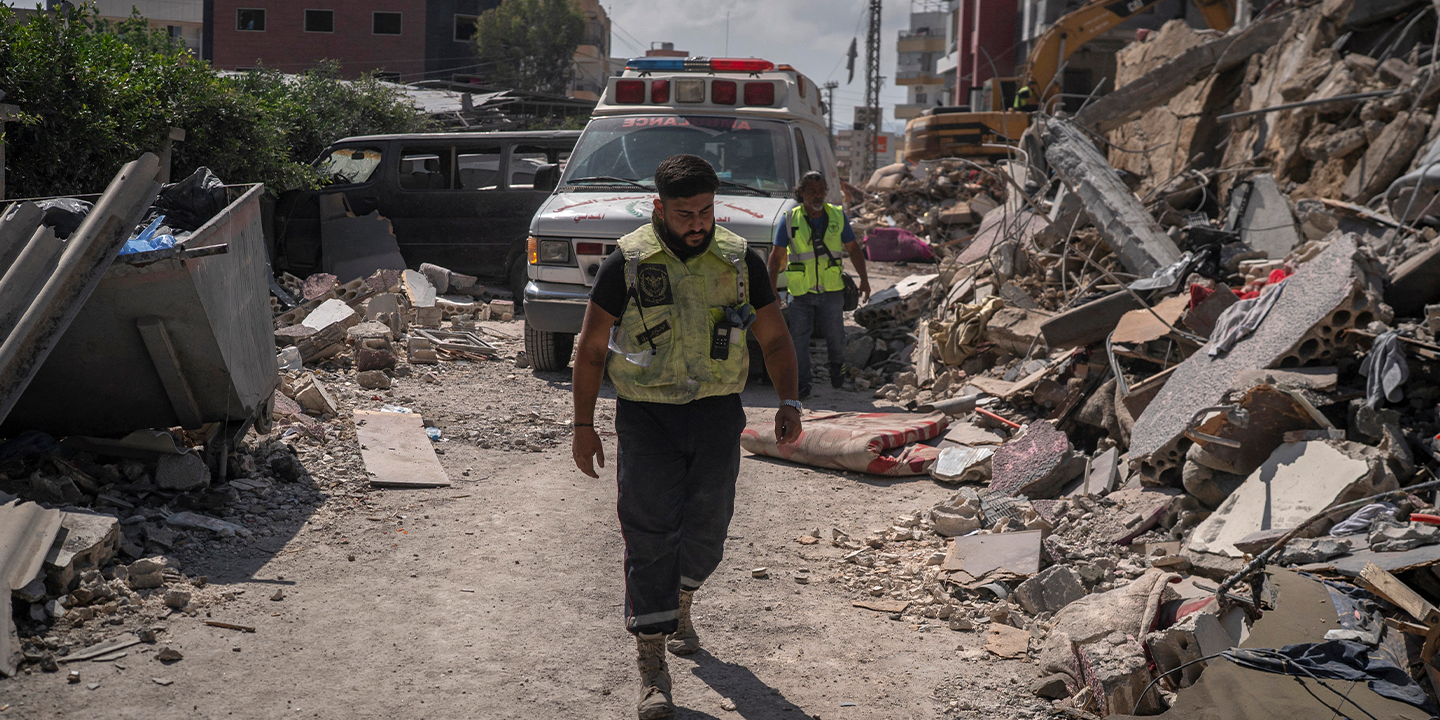
On 1 June – one day before the fourth round of direct talks between Israel and Lebanon was scheduled to take place – Israeli Prime Minister Benjamin Netanyahu directed Israeli forces to expand their offensive in Lebanon and ordered attacks on Beirut’s southern suburbs. Hours later, following a call with Prime Minister Netanyahu, United States (US) President Donald Trump announced that “there will be no troops going to Beirut.” Prime Minister Netanyahu subsequently reaffirmed that “if Hezbollah does not cease attacking our cities and citizens – Israel will strike terror targets in Beirut.”
Despite the so-called ceasefire, which started on 17 April, Israeli forces have continued attacks on civilians and civilian infrastructure while expanding control over Lebanese territory. According to Lebanon’s Ministry of Public Health, 3,400 people have been killed since Israel’s assault began on 2 March, including more than 1,000 since the ceasefire took effect. Since 27 May a new series of displacement orders have been issued, including blanket orders for the entire area south of the Zahrani River, extending roughly 40 kilometers north of the Israeli border and encompassing approximately 300 towns and villages. This included most of Tyre – Lebanon’s fourth largest city and a UNESCO World Heritage site. The orders were soon followed by Israeli airstrikes, including one on 1 June that damaged a hospital in Tyre, killing at least four people and injuring over 120 more.
Israeli leaders have also continued to call for a widening military campaign. On 30 May Israeli Minister of National Security Itamar Ben Gvir called on the army to “target” and “flatten” Beirut’s suburb of Dahiyah to “eliminate Hezbollah’s presence.” The following day Prime Minister Netanyahu announced that Israeli forces had further expanded their territorial control, crossing beyond the Litani River – which delineates southern Lebanon from the rest of the country – and seizing the Beaufort Castle in southern Lebanon. Israel previously used this hilltop fortress as a military outpost during its occupation of southern Lebanon between 1982 and 2000.
In response to these developments, an emergency meeting of the UN Security Council was convened on 1 June at the request of France. Except for the US, all Council members reiterated the need for de-escalation and for Israel to respect Lebanon’s sovereignty and territorial integrity. Lebanon’s Permanent Representative to the UN, Ahmad Arafa, called on the Council to “speak in one voice” and condemn Israel’s actions, stressing that impunity – “fueled” by the absence of accountability and a collective failure to deliver solutions – “emboldens the perpetrator to commit the very same crimes time and time again.”
Efforts to ensure a sustained ceasefire is fully respected and implemented by all parties must be urgently prioritized. States must refrain from providing assistance to Israel that would risk complicity in grave violations of international law, including potential atrocity crimes.
More than one month after the major escalation in coordinated offensives by Islamic militant and separatist armed groups across Mali, insecurity and protection risks for civilians have dramatically heightened. Ongoing attacks by Jama’at Nusrat al-Islam wal-Muslimin (JNIM) and counteroffensives by the Malian armed forces (FAMa) and Russia’s Africa Corps have exacted a significant toll on civilians and raised grave concerns regarding the protection of civilians.
Hundreds of people have reportedly been killed since 25 April, primarily during attacks on villages in central Mopti region claimed by JNIM, including members of local Dozo militias. JNIM has reportedly threatened villages hosting Dozo bases or refusing to submit to local agreements imposed by the group, contributing to further displacement.
The FAMa, alongside Africa Corps, has simultaneously intensified aerial operations across northern and central Mali, resulting in mounting civilian harm. On 17 May drone strikes reportedly killed 10 civilians preparing for a wedding celebration in the central region of San, while additional airstrikes targeted Kidal and surrounding communities in northern Mali. In the Tuareg village of Tadjmart, airstrikes reportedly killed a child and injured three women.
An investigation published on 26 May by Bellingcat and Jeune Afrique documented evidence suggesting the first confirmed use of Russian-made cluster munitions in Mali. Investigators identified unexploded submunitions and impact patterns consistent with cluster munition strikes in Tadjmart, corresponding to the location of airstrikes announced by the FAMa on 17 May. Cluster munitions are prohibited under the Convention on Cluster Munitions due to their indiscriminate effects and the long-term danger posed by unexploded bomblets, which can continue to kill and injure civilians long after deployment. Mali is a state party to the Convention and is therefore prohibited from using, producing or stockpiling such weapons.
Humanitarian conditions continue to deteriorate across Mali. The International Rescue Committee warns that families are increasingly struggling to access food, healthcare, water and other essential services. Rising transportation costs, fuel shortages and insecurity, including blockades imposed by JNIM, are disrupting supply chains, restricting humanitarian access and limiting the delivery of medical assistance. The Integrated Food Security Phase Classification warns that food insecurity in Kidal is expected to reach Emergency (IPC Phase 4) levels from June onwards, with some households facing Catastrophe (IPC Phase 5).
Meanwhile, the escalating military campaign has been accompanied by an intensifying crackdown on civic space. More than one month has passed since the reported abduction of prominent lawyer and government critic Mountaga Tall on 2 May, yet his whereabouts remain unknown, raising fears that he may have been forcibly disappeared.
All parties to the conflict must comply with their obligations under international humanitarian and human rights law. The reported deployment of cluster munitions highlights the urgent need for independent investigations, accountability and strengthened civilian protection measures. Malian authorities should clarify the fate and whereabouts of Mountaga Tall and end reprisals against perceived critics and civil society actors.
The UN Secretary-General’s annual report on conflict-related sexual violence (CRSV), released on 29 May, verified 9,788 cases worldwide in 2025 – more than double the number recorded in 2024. The report describes the violence as marked by “extreme brutality” and overwhelmingly targeting women and girls. As Pramila Patten, Special Representative of the Secretary-General on Sexual Violence in Conflict, noted, the report does not capture the full scale of violations, but rather indicates a “much broader pattern of violations that remain largely unseen and underreported.”
The findings reveal a dramatic rise in the systematic use of sexual violence as a tactic of war, torture, terrorism and political repression amid escalating armed conflicts and deepening humanitarian crises. Across 21 conflict-affected countries, civilians were subjected to rape, gang rape, sexual slavery, abductions and other forms of sexual violence by state and non-state actors. Victims ranged in age from one to 70 years old. Persons with disabilities, LGBTQIA+ persons and other marginalized groups notably faced heightened risks amidst intersecting vulnerabilities.
In countries such as the Central African Republic, Sudan, South Sudan, Myanmar and Haiti, sexual violence is linked to shifting frontlines, territorial contestation and the presence of multiple armed actors, complicating attribution and undermining accountability. Women and girls perceived to be affiliated with rival groups, or targeted on ethnic grounds, were deliberately subjected to sexual violence as a form of collective punishment. Non-state armed groups and criminal networks also used sexual violence to terrorize civilians, facilitate recruitment, secure resources and generate illicit revenue.
The report further documents the use of sexual violence in detention settings. In Myanmar, sexual violence is part of “the repertoire of political violence to intimidate and punish opponents.” The UN also verified patterned abuses by Russian forces against Ukrainian prisoners of war and civilians, as well as CRSV, including as a form of torture, by Israeli forces against Palestinian detainees in the Occupied Palestinian Territory.
The report’s annex lists 77 parties credibly suspected of committing patterns of CRSV, including 62 non-state actors. Newly listed parties include three armed groups operating in the Democratic Republic of the Congo, as well as Russian and Israeli forces for their conduct in Ukraine and the Occupied Palestinian Territory, respectively. While both Russia and Israel have rejected their inclusion, the listing mechanism remains an important tool for documenting violations and challenging impunity.
Despite escalating needs, funding cuts and shrinking operational space are undermining prevention, monitoring and survivor assistance efforts. The international community must urgently strengthen support for survivors and accountability mechanisms by ensuring sustained funding for women-led organizations, human rights defenders and frontline service providers. The UN Security Council should recognize CRSV as a tactic of war and an atrocity crime, while ensuring that documentation, survivor-centered responses and accountability efforts remain protected and resourced.
Ralph Bunche Institute for International Studies
The Graduate Center, CUNY
365 Fifth Avenue, Suite 5203
New York, NY 10016-4309, USA