4 February 2026
Atrocity Alert
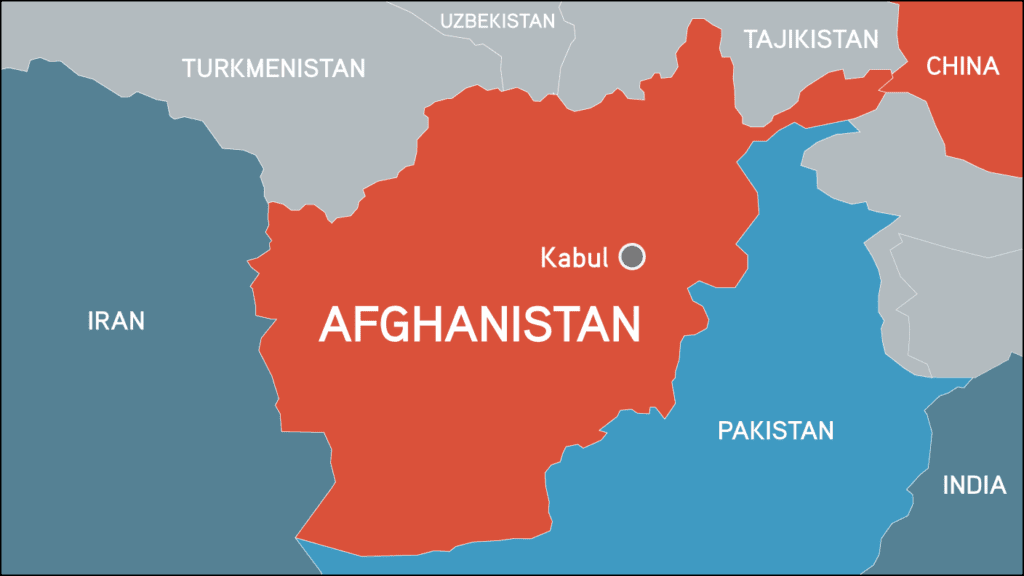
Women and girls in Afghanistan are facing gender apartheid perpetrated by the Taliban de facto authorities. Other populations remain at risk of systematic human rights violations.
Since Taliban forces effectively overthrew the Afghan government in August 2021, the Taliban and various armed groups, including the so-called Islamic State in Iraq and the Levant-Khorasan (ISIL-K), have committed widespread and systematic human rights violations and abuses throughout the country.
The Taliban de facto authorities have imposed policies that severely curtail the rights of women and girls, constituting extreme gender-based discrimination and violating the Convention on the Elimination of All Forms of Discrimination Against Women (CEDAW). In August 2024 the Taliban implemented the so-called “vice and virtue” laws, codifying over 100 sweeping repressive edicts imposed since August 2021. These laws aim to eradicate women from public life by requiring them to fully cover their faces, prohibiting them from speaking or being heard in public and severely limiting their freedom of movement, expression, employment opportunities, political and public participation and access to education and healthcare. Edicts implemented in 2024 reinstated public stoning and flogging to death for alleged adultery, among other violations of Taliban ideology. The UN Assistance Mission in Afghanistan (UNAMA) has documented arbitrary arrests and detentions of women and girls because of alleged non-compliance with the imposed “Islamic dress code.”
According to the UN Special Rapporteur on the situation of human rights in Afghanistan and the Working Group on Discrimination Against Women and Girls, the Taliban may be perpetrating gender persecution and gender apartheid as they appear to be governing through systematic discrimination with the intent to subject women and girls to total domination. UNAMA reports that women – particularly Shia Hazara women and girls – live in fear of arrest and harassment, with some forcibly taken into custody and subjected to ill-treatment. Women’s rights activists and gender equality advocates have also faced targeted killings, enforced disappearances, incommunicado detention, attacks and harassment.
UNAMA has also documented evidence of the Taliban committing extrajudicial killings, arbitrary arrests and detentions, incommunicado detention and torture and ill-treatment against media workers, human rights defenders and former government affiliates, among others.
Ethnic and religious minority communities continue to be targeted by the Taliban, ISIL-K and others, with members facing arbitrary arrest, torture, summary execution and forced flight. ISIL-K frequently claims attacks targeting Shia Hazara, other Shia Muslims, Sufi Muslims, Sikhs and other minorities, as well as places of worship. The UN Special Rapporteur has reported that these attacks appear systematic in nature and reflect elements of an organizational policy, likely amounting to crimes against humanity, reiterating these findings as recently as February 2025
Populations in Afghanistan are enduring a severe humanitarian crisis, compounded by the impact of sanctions and the freezing of state assets. In December 2021 the UN Security Council adopted Resolution 2615 to allow for humanitarian aid without violating UN sanctions against the Taliban, which have been in place since 2011.
In March 2020 the International Criminal Court (ICC) launched an investigation into alleged atrocities since July 2002, focusing on the Taliban and ISIL-K. In January 2025 the ICC Chief Prosecutor filed applications for arrest warrants for two Taliban leaders for gender-based persecution, marking the Court’s first charges of this kind. The ICC issued arrest warrants for an additional two Taliban leaders in July 2025. In September 2024 Australia, Canada, Germany and the Netherlands initiated legal proceedings against Afghanistan before the International Court of Justice (ICJ) for violations of CEDAW.
The Taliban were the de facto authorities in Afghanistan from 1996-2001 before they were overthrown by a North Atlantic Treaty Organization coalition of military forces. During their insurgency against the internationally recognized Afghan government, the Taliban perpetrated likely crimes against humanity and war crimes while Afghan security forces and members of the United States military and Central Intelligence Agency also committed likely war crimes.
On 6 October 2025 the UN Human Rights Council adopted a resolution establishing an independent investigative mechanism to collect, preserve and analyze evidence of international crimes and other serious violations of international law in Afghanistan, and to prepare case files for future proceedings. Once operational, this mechanism will be the only international body examining abuses committed not only by the Taliban, but also by officials of the former government, international forces, non-state armed groups and others.
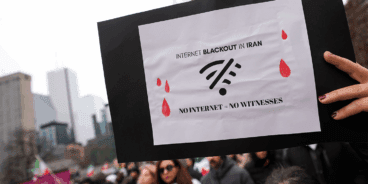
In early October the Taliban imposed a 48-hour nationwide internet shutdown – the first time Afghanistan has experienced a total blackout – under the pretext of preventing “vice.” The shutdown risked inflicting significant harm by further restricting women and girls’ access to online education and public spaces and disrupting humanitarian efforts.
The Taliban’s distortion of religious principles to justify discriminatory and persecutory policies, coupled with restrictions on fundamental freedoms and impunity for past and ongoing violations and abuses, significantly heightens the risk of further human rights violations and atrocity crimes. The institutionalized marginalization of women and girls and widespread discrimination and violence against them likely amounts to gender persecution, a crime against humanity. Amid immigration crackdowns around the world, returnees, especially women and girls, minorities, journalists and human rights defenders, may face heightened risks of arbitrary detention, enforced disappearance and systematic discrimination.
The Taliban appears to be targeting journalists, civil servants, human rights defenders and former government affiliates on a widespread and systematic basis. There are no independent national bodies to document human rights violations due to the dismantling of key institutions, including the Afghan Independent Human Rights Commission and the Office of the Attorney General, while the Special Rapporteur has been prohibited from accessing the country.
The Doha Process, a coordinated international effort to address Afghanistan’s challenges under Taliban rule, now proceeding under UNAMA’s “Comprehensive” or “Mosaic” Approach, provides a flexible, phased and conditional political framework for reintegrating Afghanistan into the global community through six pillars of engagement, including international obligations, human rights and inclusive governance. However, the process fails to meaningfully include Afghan civil society, particularly women human rights defenders, reduces human rights to negotiable issues and risks conferring unwarranted legitimacy on the Taliban.
As de facto authorities, the Taliban are bound by Afghanistan’s international human rights obligations, including CEDAW. They must uphold these obligations by halting violations and abuses by their officials and guaranteeing equal protection and promotion of the rights of all Afghans, regardless of gender, ethnicity, religion or political affiliation. The Taliban must also allow international assistance and monitoring to help fulfill these obligations.
Any path toward normalization must be strictly contingent on the Taliban’s compliance with international law, particularly with respect to the rights of women and girls. Both the Taliban and UN member states should engage constructively with the Doha Process, while ensuring the meaningful inclusion of Afghan women human rights defenders and civil society in all negotiations and future political arrangements.
The Taliban must investigate patterns of human rights violations and take steps to prevent their recurrence, including by holding perpetrators accountable. They must allow the Special Rapporteur safe and unfettered access to Afghanistan and fully cooperate with UNAMA and the UN Human Rights Office.
The international community should continue to pursue justice for likely atrocity crimes, regardless of the position, nationality or affiliation of the alleged perpetrator. The international community should cooperate with and lend support to the ICC and ICJ. States must uphold the principle of non-refoulement.
For more on the Global Centre’s advocacy work on the situation in Afghanistan, see our Afghanistan country advocacy page.
Ralph Bunche Institute for International Studies
The Graduate Center, CUNY
365 Fifth Avenue, Suite 5203
New York, NY 10016-4309, USA